 Español
Getting your driver's license in New York is a big deal, and honestly, the road test can feel intimidating even if you've been driving for years in another country. I've worked with hundreds of students prepping for their NY road test, and the ones who pass on their first attempt all have one thing in common: they prepare strategically, not just casually.
The good news? The test only lasts about 15 minutes, and you're allowed to lose up to 29 points before failing. The bad news? Those 15 minutes will test specific skills that experienced drivers often overlook. Let me walk you through exactly how to prepare so you're not one of the roughly 50% who fail on their first try.
Getting Your Prerequisites in Order
Before you can even schedule your road test, you need two things: a learner's permit and completion of a 5-hour pre-licensing course.
Your learner's permit requires passing a 20-question written test at the DMV (you need 14 correct answers). If you're under 18, bring a parent or guardian to sign forms. The permit arrives by mail within two weeks. Once you have it, you can drive with a licensed driver over 21 in the passenger seat.
The 5-hour pre-licensing course is mandatory for anyone who didn't complete driver's education in high school. Don't confuse this with actual driving practice-it's a classroom session covering safe driving principles, drunk driving dangers, and collision prevention. You can't schedule your road test without the completion certificate, so get this done early. Most driving schools offer it, along with some high schools and community colleges.
If you're under 18, you'll need to wait six months after getting your permit before taking the road test. Use this time wisely. The state requires 50 hours of supervised driving (15 at night, 10 in heavy traffic), but even adults should aim for this amount. Make sure you have everything you need for your NY road test well before test day.
The Skills That Actually Matter
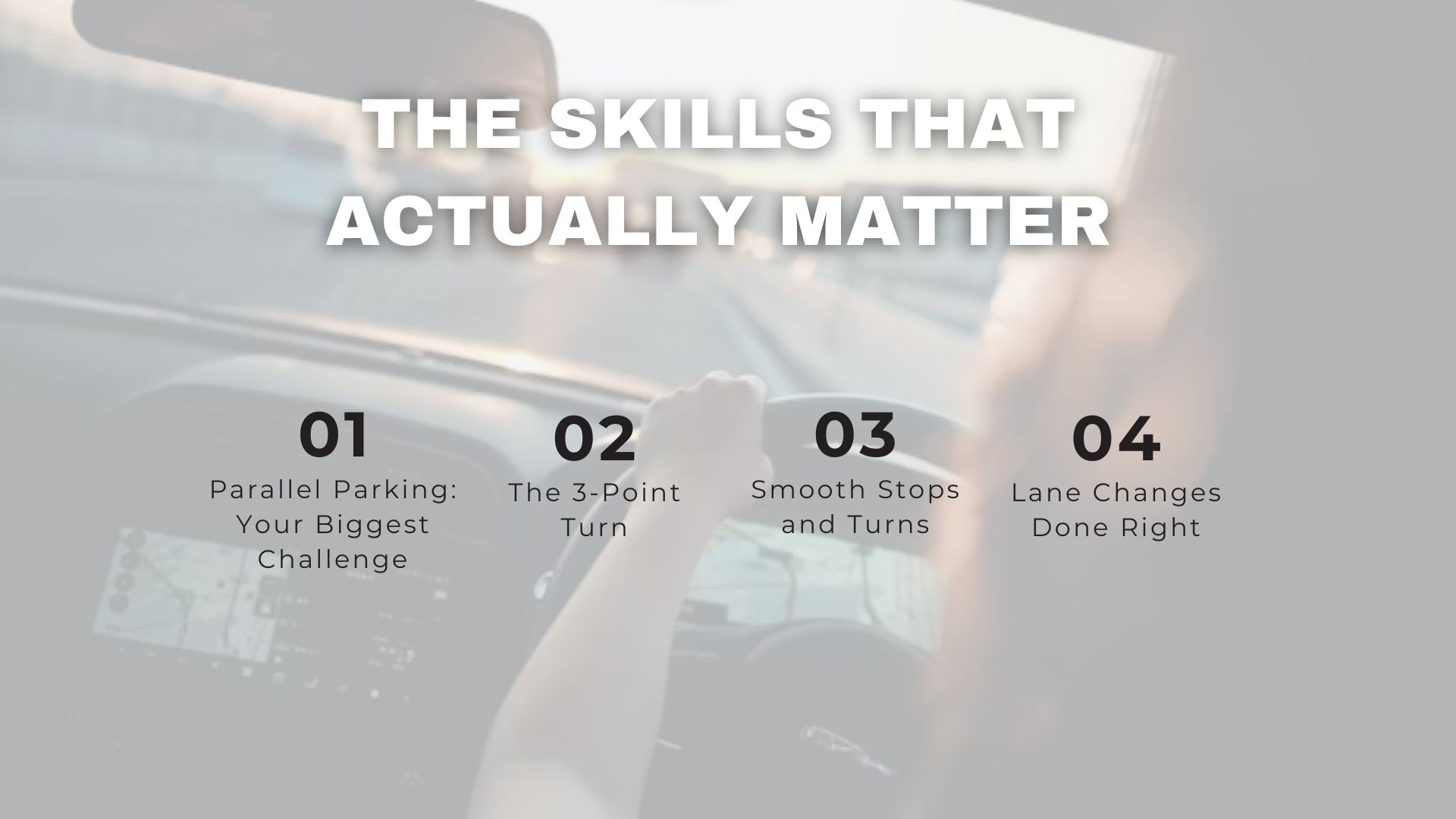
Parallel Parking: Your Biggest Challenge
Let's be direct: most people who fail do so because of parallel parking. The technique itself isn't complicated, but the execution under pressure gets tricky.
Pull alongside the car in front of your space until your mirrors align, about two feet apart. Turn the wheel two full rotations right and reverse until you hit a 45-degree angle-you'll see your door handle touching the curb in your right mirror (what instructors call the "street pizza wedge"). Stop. Straighten the wheel and reverse until your front clears the car beside you. Turn one rotation left and back in slowly until you're straight.
Here's the critical part: stay 6-9 inches from the curb, but if you have to choose between being too far and touching the curb, pick too far every time. Hitting the curb-even lightly-is an instant fail. I've seen perfect drivers fail because they grazed the curb going for that "perfect" park. Lose 5 points for distance instead of losing the whole test. For a detailed breakdown of the technique, check out our parallel parking guide.
The 3-Point Turn
You'll definitely be asked to do this, and it's simpler than parallel parking if you follow the steps. Signal, check traffic, turn hard left, and drive toward the opposite curb. Stop before hitting it. Shift to reverse, look over your shoulder (not just in mirrors), and back up while turning right. Stop, shift to drive, and complete the turn.
Two common mistakes: don't do a U-turn even if you can physically make it-that's not a 3-point turn and will cost you points. And if your 3-point becomes a 4-point because you need an extra adjustment, that's only 5 points. Don't panic.
Smooth Stops and Turns
Jerky movements show poor vehicle control. When approaching a stop sign or red light, ease off the gas early and brake gradually. You should stop before your front bumper crosses the stop line or crosswalk-overshooting this loses points.
For turns, slow down before entering, use hand-over-hand steering (keep both hands at 10 and 2), and turn into the nearest lane. Right turns especially trip people up: you must turn into the closest lane, not swing wide into the next one over. If there's an obstruction like a parked truck, turn into the close lane first, signal again, check your blind spot, then change lanes around it.
Lane Changes Done Right
Check your mirrors, turn your head to check blind spots (make it obvious-the examiner needs to see you looking), signal for at least three seconds, then smoothly merge. No sudden movements. This sequence matters: mirror, blind spot, signal, wait, then move.
Need a Car for Your Road Test?
We bring a DMV-ready vehicle to your test site and give you a warm-up drive before the examiner gets in. Tell us your appointment time and we handle the rest.
📞 +1 (929) 243-9547Mon-Sat: 9 AM - 7 PM
Understanding How You're Scored
The scoring system determines whether you walk out with an interim license or a retake appointment. You can afford to lose 29 points maximum; 30 or more means you fail. Different violations cost different amounts, and understanding how many points you can lose helps you prioritize what matters most.
Automatic failures exist regardless of your point total. Breaking traffic laws, getting in an accident, forcing the examiner to use their brake, or hitting the curb all result in instant failure. No exceptions.
Common point deductions include:
- Failing to observe (10 points) - pulling out in front of traffic
- Poor judgment in traffic (10 points) - not anticipating what other drivers will do
- Failing to signal (5 points) - use that turn signal constantly
- Not checking blind spots (5 points) - turn your head visibly
- Following too closely (10 points) - keep enough distance to see the wheels of the car ahead
- Speed excessive for conditions (15 points) - stick to 20-25 mph during the test
- Failing to yield to pedestrians (15 points) - they always have right of way
The examiner isn't trying to trick you. They're following a standardized checklist, evaluating specific behaviors and skills that prove you can operate a vehicle safely.
What Happens on Test Day
Arrive 15 minutes early. You'll need your permit, 5-hour course certificate, and a registered, insured vehicle in working condition. The examiner checks that all lights function (headlights, brake lights, turn signals), mirrors are intact, tires are properly inflated, the horn works, and windshield wipers operate.
Before starting the engine, adjust all three mirrors even if you drove there and they're already positioned correctly. The examiner needs to see you do this. Buckle your seatbelt and confirm the examiner has buckled theirs.
The test covers residential and light-traffic roads. You'll make various turns, change lanes, parallel park, and execute a 3-point turn. The examiner gives clear instructions-if you don't understand something, ask for clarification. They won't dock points for questions.
Stay at or slightly below the speed limit. My students who pass typically maintain 20-25 mph throughout the test unless instructed otherwise. This isn't about being overly cautious; it's about showing control and giving yourself reaction time.
Getting the Right Vehicle
Choosing the right car for your road test matters more than you think. Use a vehicle you've practiced in extensively-one where you know exactly how the brakes feel, how sharply it turns, and where all the controls are located.
If you don't own a car, you have options. Many driving schools rent vehicles specifically for road tests, often as part of package deals that include lessons. Some students use a friend or family member's car, which works fine as long as you get substantial practice time in it beforehand. In Brooklyn, for example, you can rent a car specifically for your road test through driving schools that specialize in test preparation.
The vehicle must be registered and insured with working lights, horn, wipers, and properly inflated tires. Any check engine lights or mechanical issues mean the examiner won't let you test.
Practice Strategies That Work
Here's what separates students who pass from those who don't: the passers practice deliberately, focusing on test-specific skills, not just "driving around."
Spend time in the actual testing area after hours. Learn where the common parallel parking spots are, identify tricky intersections, and note speed limits. This familiarity reduces anxiety on test day.
If you've been driving for years in another country, you might think you don't need lessons. You're wrong. I thought the same thing. A pre-test lesson doesn't teach you how to drive; it teaches you how to pass this specific test. Experienced drivers often have habits that work fine in real life but cost points on the test-rolling through stop signs, casual one-hand steering, not exaggerating mirror checks.
Practice these scenarios repeatedly:
- Parallel parking in actual street spots (not just cones in a lot)
- 3-point turns on residential streets
- Right turns into the nearest lane (not swinging wide)
- Left turns while positioned in the intersection center
- Coming to complete stops with the car fully still for a count of three
- Checking blind spots with visible head turns
Common Mistakes to Avoid
The curb issue deserves repeating: park farther away rather than risk touching it. Two feet from the curb loses you 5 points. Hitting the curb loses you everything.
Experienced drivers particularly struggle with exaggerated safety checks. You're used to quick eye movements; examiners can't see that. Move your entire head when checking mirrors and blind spots. It feels unnatural at first, but it proves you're being observant.
Don't roll through stop signs-even slightly. Come to a complete stop where you can feel the car settle, count to three, then proceed. At intersections without signals, check left, right, left again before going.
Speed creep catches people off guard. You're nervous, focused on technique, and suddenly you're doing 35 in a 30 mph zone. Glance at your speedometer regularly.
Poor judgment in traffic often means not giving enough space or time to other drivers and pedestrians. When you see pedestrians anywhere near a crosswalk, stop and wait for them to fully clear. If another car is doing something unpredictable, slow down and create space.
Your Path Forward
Passing your NY road test comes down to preparation, not luck. Master parallel parking and the 3-point turn since those cause the most failures. Practice in the vehicle you'll use for the test. Get comfortable with the scoring system so you know which mistakes to absolutely avoid versus which ones cost minimal points.
Schedule that pre-licensing course early so it's not holding you back. Log your practice hours with attention to different conditions-nighttime, traffic, weather. Consider a professional lesson even if you're an experienced driver, because understanding the test's specific requirements makes all the difference.
The 15-minute road test evaluates whether you can operate a vehicle safely and follow traffic laws. It's not designed to trick you. Show up prepared, stay focused on the road ahead, and demonstrate the skills you've practiced. Your license is waiting on the other side.
Need a Car for Your Road Test?
We bring a DMV-ready vehicle to your test site and give you a warm-up drive before the examiner gets in. Tell us your appointment time and we handle the rest.
📞 +1 (929) 243-9547Mon-Sat: 9 AM - 7 PM
Frequently Asked Questions
-
How many practice hours do I really need?
About 50 hours is ideal. At least 15 hours should be at night and 10 in heavy traffic. Even experienced foreign drivers benefit from adapting to US traffic patterns.
-
What happens if I fail the road test?
You can retake the test. Your permit includes two attempts; additional attempts require an extra fee. The examiner explains your mistakes so you can improve.
-
Can I take the test without going through a driving school?
Yes, if you have your learner permit and 5-hour course certificate. However, professional lessons significantly increase your pass rate.
-
Is the road test harder in certain DMV locations?
Scoring is the same statewide, but some locations have busier traffic or tighter parallel parking spots. Practicing near your DMV is recommended.
-
What should I do if I make a mistake during the test?
Keep driving calmly. Minor mistakes are allowed. Panicking often leads to additional errors.
-
How strict are examiners about speed?
Speeding loses points. Driving 5 mph under is acceptable. Driving far under the limit may be considered impeding traffic.
-
Do I need to parallel park on every test?
Yes. Parallel parking is one of the required exam skills and is almost always included.
-
What if it’s raining or snowing on my test day?
Tests continue unless conditions are dangerous. Drive slower, use wipers, and maintain extra following distance.