 Español
You've just finished your New York road test, and your heart is probably still racing. The examiner handed you a paper, said a few words, and now you're wondering: "Did I pass?" Don't worry – we've got you covered with everything you need to know about checking your results and what happens next.
The Waiting Game: When Will You Know?
Unlike some states where examiners tell you immediately, New York keeps you in suspense for a few hours. Your results become available online after 6 PM on the day of your test. This waiting period might feel eternal, but it gives the DMV time to process all test data properly.
Pro tip: Set a phone reminder for 6:15 PM so you don't spend the entire day refreshing the website.
Step-by-Step: Checking Your Results Online
What You'll Need
Before you start, gather these items:
- Your learner's permit (for your DMV ID number)
- Your date of birth
- A stable internet connection (trust us, you don't want the page to crash at the crucial moment)
The Process
- Visit the official results portal: Go to https://roadtestresults.nyrtsscheduler.com/
- Enter your information:
- DMV ID Number (found on your learner's permit)
- Date of birth in MM/DD/YYYY format
- Click "Search"
- View your results by clicking "View Details" if available
Can't Access the Website?
Sometimes the results portal experiences high traffic. If you can't get through:
- Try again in 30 minutes
- Clear your browser cache
- Try a different browser or device
- Call your local DMV office the next business day
Need a Car for Your Road Test?
We bring a DMV-ready vehicle to your test site and give you a warm-up drive before the examiner gets in. Tell us your appointment time and we handle the rest.
📞 +1 (929) 243-9547Mon-Sat: 9 AM - 7 PM
Understanding Your Score Breakdown
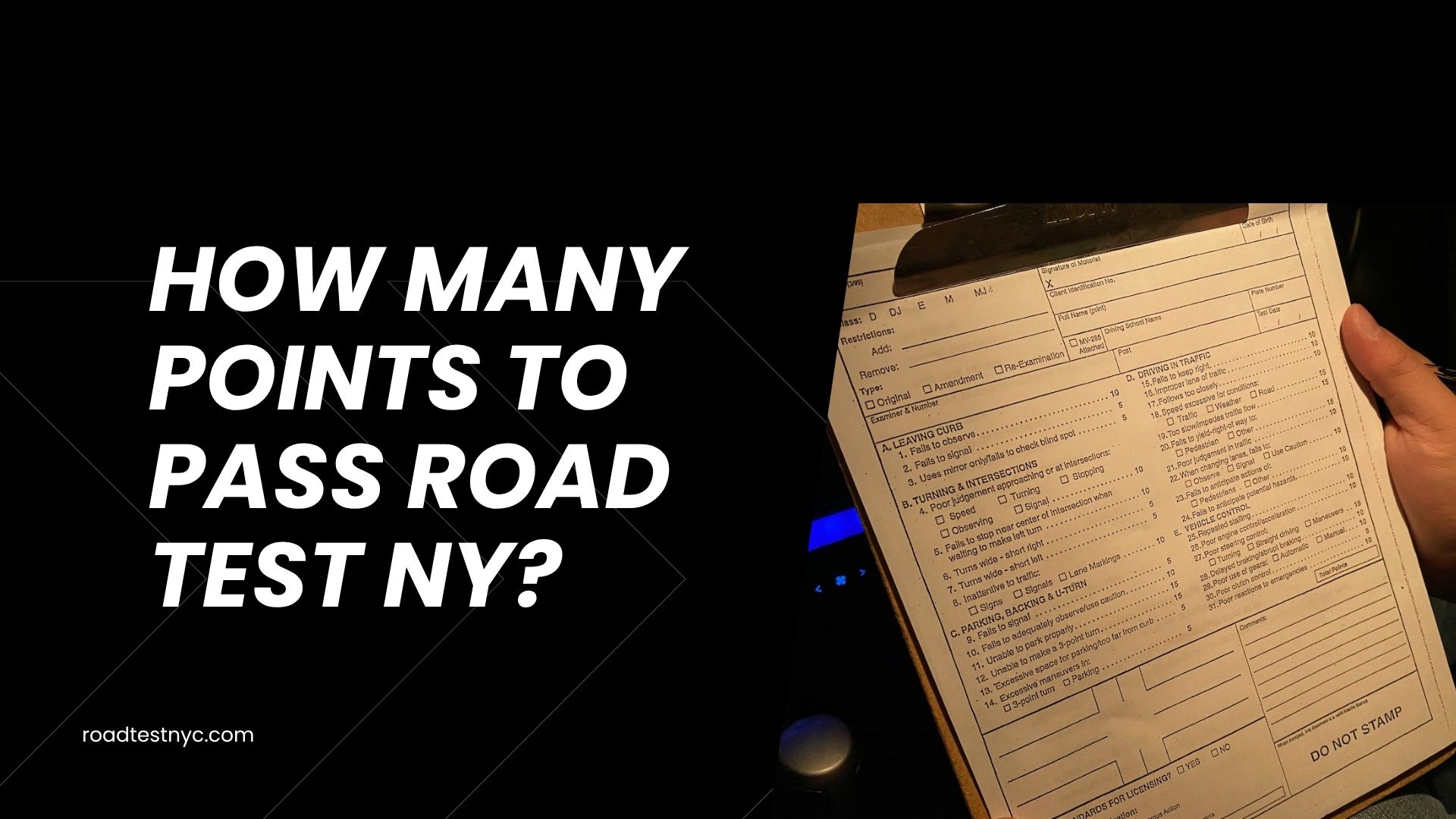
New York uses a point deduction system that many test-takers find confusing. Here's how it actually works:
The Scoring System
- You start with a perfect score
- Points are deducted for each error (5-15 points depending on severity)
- 30+ points deducted = automatic failure
- Certain critical errors result in immediate failure regardless of points
Common Point Deductions
Minor errors (5 points each):
- Rolling stops
- Minor speed variations
- Incomplete mirror checks
Moderate errors (10 points each):
- Improper lane changes
- Following too closely
- Poor parking alignment
Major errors (15 points each):
- Running red lights or stop signs
- Dangerous maneuvers
- Excessive speeding
Want to know exactly what examiners focus on during your test? Check out our detailed guide on what the driving examiner will look for during your road test.
Automatic Failure Situations
Some mistakes end your test immediately:
- Causing an accident
- Breaking traffic laws that endanger others
- Refusing to follow examiner instructions
- Being unable to control the vehicle
You Passed! Here's What Happens Next
Your Temporary License
You'll see an "Interim License" link in your test results. Print this document immediately – it's your legal license until your permanent one arrives. Keep it with your learner's permit when driving.
Getting Your Permanent License
Your official photo license arrives by mail within 10-14 business days. If it doesn't arrive within three weeks, contact the DMV.
The Probationary Period Reality Check
Every new driver in New York enters a probationary period, but what does this actually mean?
For all new drivers:
- Any traffic violation can trigger additional penalties
- Accumulating 6+ points within 18 months means probation extension
- Serious violations can result in license suspension
For drivers under 18:
- Additional restrictions apply to DJ and MJ licenses
- Night driving limitations (11 PM - 5 AM)
- Passenger restrictions for the first six months
Insurance Considerations
Once you have your license:
- Notify your insurance company immediately
- Your rates will likely change (often increase)
- Shop around for better rates – being a new driver doesn't mean accepting the first quote
You Didn't Pass – Here's Your Action Plan
Failing your road test isn't the end of the world. About 40% of first-time test-takers in New York don't pass, so you're in good company.
Immediate Steps
- Keep your learner's permit – it remains valid until expiration
- Review your score breakdown – identify specific areas that need work
- Don't schedule a retest immediately – give yourself time to improve
Analyzing Your Feedback
The scored items section is gold for improvement. Common failure reasons include:
- Parallel parking struggles (practice with cones or markers) - Master this skill with our complete parallel parking guide
- Three-point turns (find an empty parking lot to practice)
- Speed control (practice maintaining consistent speeds)
- Observation skills (work on checking mirrors and blind spots)
Smart Practice Strategy
Instead of just driving around, create focused practice sessions:
Week 1-2: Master the maneuvers
- Spend 30 minutes daily on parallel parking
- Practice three-point turns in different spaces
- Work on backing around corners
Week 3-4: Real-world skills
- Drive in test area conditions
- Practice during similar times as your test
- Focus on smooth stops and starts
When to Schedule Your Retest
Signs you're ready for another attempt:
- You can parallel park consistently without major adjustments
- Your practice drives feel smooth and confident
- Other drivers aren't honking at you (seriously!)
- You're checking mirrors and blind spots automatically
Retest Logistics
- First two retests: No additional fee beyond the original test fee
- Third attempt and beyond: Additional $10 skills test fee
Waiting period: No mandatory waiting period, but 2-3 weeks of practice is recommended
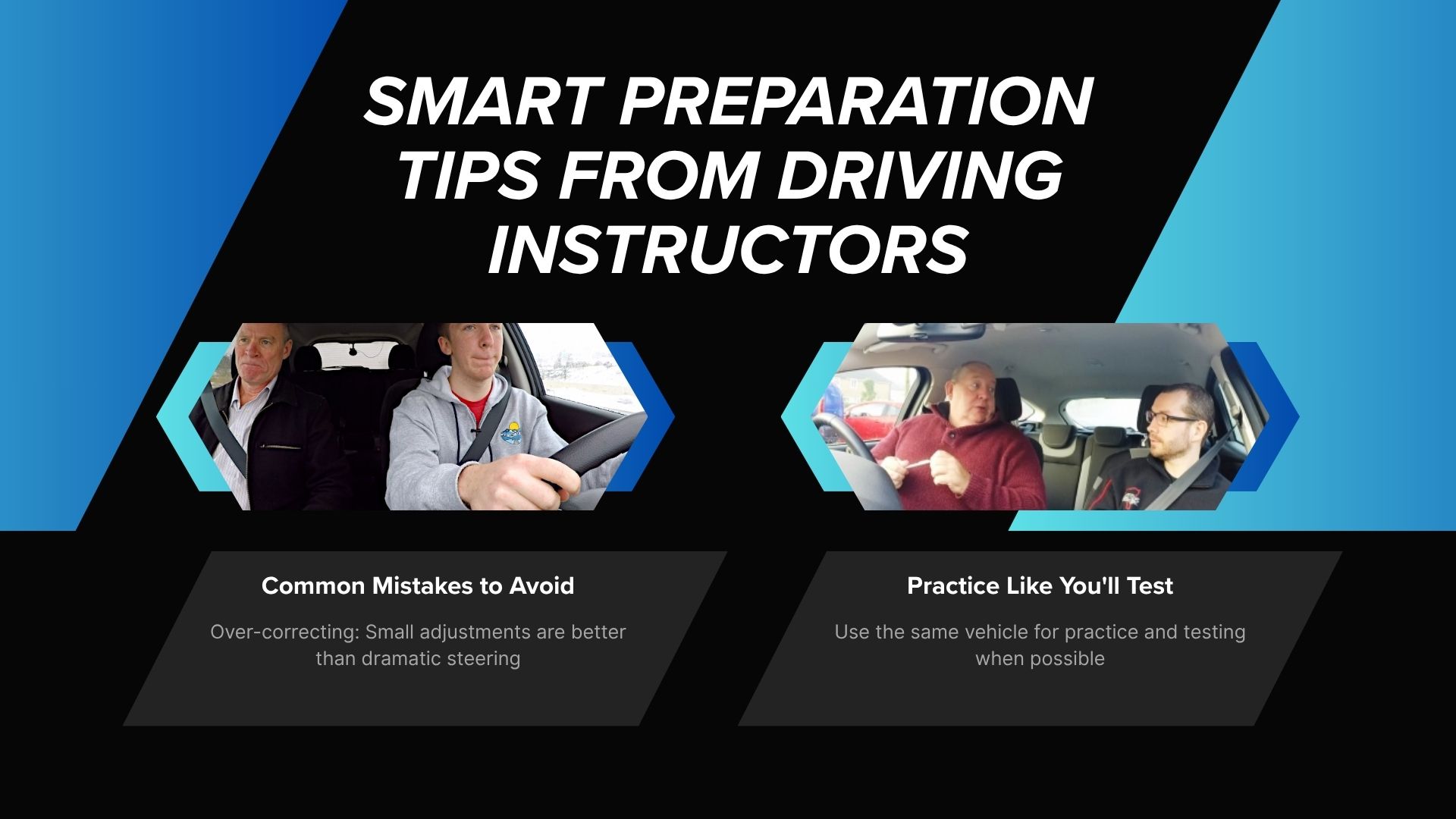
Smart Preparation Tips from Driving Instructors
Test Day Strategy
- Arrive 15 minutes early but not earlier (you'll just get nervous)
- Bring a clean, well-maintained vehicle with working signals and lights - Need a car for your test? Book a car for your road test through our service
- Adjust mirrors and seat before the examiner gets in
- Stay calm during instruction – examiners prefer confident drivers
Common Mistakes to Avoid
- Over-correcting: Small adjustments are better than dramatic steering
- Rushing: Take your time, especially with maneuvers
- Arguing with the examiner: Even if you disagree, stay respectful
- Forgetting the basics: Signal, check mirrors, follow speed limits
Practice Like You'll Test
- Use the same vehicle for practice and testing when possible
- Practice at different times of day
- Include highway driving if your test route includes highways - Familiarize yourself with road test sites in your area
- Work with a driving instructor for objective feedback
Beyond the Test: Becoming a Lifelong Safe Driver
Passing your road test is just the beginning. The real learning happens during your first years of independent driving.
Building Confidence Gradually
- Start with familiar routes
- Avoid highways until you're comfortable with city driving
- Practice parking in different types of spaces
- Drive in various weather conditions with an experienced driver first
Continuing Education
Consider taking a defensive driving course – many insurance companies offer discounts, and you'll learn advanced safety techniques not covered in basic driver training.
Final Thoughts
Whether you're checking results or preparing for a retest, remember that getting your license is a significant responsibility. The road test isn't just about proving you can drive – it's about showing you can drive safely around other people's families.
Take the feedback seriously, practice consistently, and don't rush the process. Every expert driver was once a beginner, and every beginner can become an expert with time and dedication. For comprehensive preparation tips, check out our basic road test guide.
Your independence is just around the corner – literally. Drive safely, and welcome to the community of New York drivers.
Need additional practice or professional instruction before your road test? Our certified instructors have helped thousands of students pass their New York road tests. Contact us today to schedule your lessons and increase your chances of first-time success.